
By: W Wangzei Konyak
Posted on: 26 Jun 2025
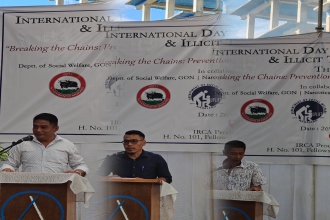
Dimapur | June 26, 2025:
As part of the global observance of the International Day Against Drug Abuse and Illicit Trafficking, a powerful awareness program was held at IRCA Prodigals’ Home, Fellowship Colony, Dimapur, under the theme "Breaking the Chains: Prevention, Treatment, and Recovery for All!" The event was organized in collaboration with Prodigals' Home, the Department of Social Welfare, Government of Nagaland, and the Narcotics Control Bureau. One of the most moving addresses came from a representative of the Dimapur District Users Network, who delivered a heartfelt testimony and strong call to action. Emphasizing that awareness is the foundation of prevention, the speaker began by recalling the significance of the day, first declared by the United Nations General Assembly in 1987 to promote international cooperation in combating drug abuse and illicit trafficking.
Identifying himself as a first-generation drug user and survivor from the mid-1980s, he reflected on the early years of drug abuse in Nagaland:
> “In the last 40 years, I have seen how addiction took hold when there was no awareness, no information, and no preventive efforts. Nobody even knew the consequences.”
He stated that prevention must begin at home, adding,
> “If there’s no information, how can there be prevention? We lived in ignorance and denial. The conversation must start within the family.”
Highlighting social challenges, he pointed to passivity among Naga youth, cultural taboos, and poor parenting as major roadblocks to effective awareness. He also spoke of the generational impact of addiction, sharing that many of his peers are still battling addiction—and now their children are affected too.
The speaker criticized the lack of drug-related discussions in schools, urging:
> “Schools should not just be about exams. Morning assemblies and classrooms must create space to talk about addiction. Proper parenting and education can help children say ‘no’ to drugs.”
Challenging the over-reliance on non-governmental organizations, he asked:
> “Why wait only for NGOs to do awareness?”
He stressed that every section of society must act collectively, including families, institutions, and faith-based organizations.
He also noted the limited resources of the state government, stating,
> “The Government of Nagaland is surviving in this area only because of the tireless work of NGOs.”
Calling upon the Church to play a more proactive role, he said:
> “The Church is one of the most powerful institutions. It can influence policy and initiate community-wide awareness programs using its own resources.”
He concluded his speech with a clear and urgent reminder:
> “Awareness is the only key takeaway on this special day. Unless we spread awareness, there can be no prevention.”
Additional Key Messages:
Mr. L. Hunkholal, Superintendent of the NCB Dimapur Field Unit stressed the need for a change in mindset, stating:
> “Drug abuse should be treated as a health issue, not a crime. Addiction needs medical care and a humane approach.”
Mr. T. Meren Jamir, Counselor at IRCA Prodigals’ Home, emphasized the role of educational institutions:
> “If schools include materials on drug education, it can go a long way.”
He also reflected on past shortcomings:
“Churches visited rehab centres but remained distant. People from the U.S. came all the way to help our people, yet we failed to support our own. The Church must reflect deeply on the lives of drug addicts.”
The program served as a stirring reminder of the collective responsibility to break the chains of addiction through prevention, treatment, and recovery—starting with awareness at every level of society.