
By: Team Dimapur 24/7
Posted on: 15 Nov 2026
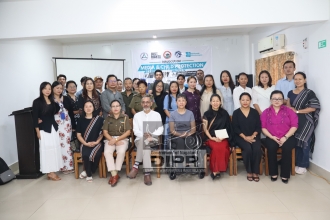
Reporting on child protection should go beyond avoiding harm and actively examine systemic failures, said Diethono Nakhro, Founder and Executive Director of Khrieto Nakhro Foundation, at the State Level Dialogue on Media and Child Protection held at Hotel Saramati, Dimapur, on Saturday.
Delivering the keynote address, Nakhro said the media's influence comes with added responsibility when children are involved. Beyond the usual safeguards, such as not revealing a child victim's identity or sensationalising abuse, she said journalists should ask whether warning signs were ignored, whether the child had access to support, and whether authorities responded. Stories, she said, should not end with an incident or an arrest.
She noted that in Nagaland's close-knit communities, details such as the village, school, family circumstances or the accused's identity can reveal a child even when the name is withheld, calling for careful editorial judgment. At the same time, privacy should not be used as an excuse to silence legitimate reporting or shield institutions and perpetrators.
Nakhro drew attention to children with disabilities, who face the same risks as other children but often greater barriers to reporting abuse and accessing justice. She cited the lack of sign language interpretation for deaf children and communication support for those with intellectual disabilities. She urged the media to avoid narratives of pity and ask instead whether such children had equal access to protection and justice.
She also said customary practices must not become a reason to overlook violations of children's rights, and called for attention to children missing from media coverage, including those in remote villages and outside the education system. On digital reporting, she cautioned that stories can be copied and circulated even after being corrected or removed, and that speed should never override accuracy, dignity and children's safety.
Referring to ethical media guidelines drafted after an earlier state-level consultation in August, Nakhro said their value lies in implementation. She concluded that the media has the power to influence how society sees and treats its children.
Reporter shares ground experience-
Among the panelists, Wangzei Konyak, reporter of Dimapur 24/7, shared his experiences of covering child-related issues, describing it as one of the most challenging aspects of journalism, particularly for those with limited experience.
He cited missing-child cases, where parents initially seek media coverage to help trace their children but later ask for the content to be taken down once the children are found.
Konyak said he tries to follow all ethical guidelines, particularly under the POCSO Act and the JJ Act. He pointed out, however, that details of child victims are sometimes shared by civil society organisations and other groups during press conferences and protests, which goes against journalistic ethics and makes responsible reporting more challenging.
Imkong Walling of The Morung Express, Veroli Zhimomi of Eastern Mirror and Bendangchuba of Nagaland Post also took part in the panel discussion.
Nitin Sethi, journalist and trustee of The Reporters' Collective Trust, Delhi, was the guest facilitator.
The dialogue was organised by Prodigals' Home and Just Rights for Children, in collaboration with Mission Vatsalya, Department of Social Welfare, Nagaland, with The Morung Express as media partner. Tushimenla Imlong of The Morung Foundation chaired the programme, which also included a pledge against child marriage.